TLDR:
- Use exit-intent popups with a strong offer (10–15% off / free shipping)
- Add an opt-in checkbox at checkout to capture high-intent buyers
- Place signup forms on high-traffic pages (homepage, blog, product pages)
- Offer a first-order discount or incentive to drive signups
- Create lead magnets (guides, quizzes, size charts) tied to your products
- Build VIP waitlists & early access lists for launches/restocks
- Use gamification (spin-to-win) to increase conversions
- Drive signups via social media CTAs & lead ads
- Run giveaways/contests to grow your list quickly
- Launch a referral program to turn subscribers into growth channels
Email marketing delivers an average return of $36 for every $1 spent, making it one of the highest-ROI channels available to e-commerce businesses. Yet most online stores treat list building as an afterthought, slapping a generic "Subscribe to our newsletter" form in the footer and hoping for the best.
If that sounds familiar, this post is for you.
You will learn 10 proven, practical tactics that e-commerce brands use to build a high-quality email list, the kind filled with people who actually want to hear from you.
Why Your Email List Is Your Most Valuable Marketing Asset
Social media algorithms can change, ad costs can go up, and SEO rankings can shift. But your email list is the one asset you own completely.
With 4.48 billion email users worldwide, email is far from dead. In fact, email consistently outperforms social media for e-commerce conversions. A study by McKinsey found that email is 40x more effective at acquiring customers than Facebook and Twitter combined.
And here is the thing about list size: you do not need tens of thousands of subscribers to see meaningful revenue. A focused list of 1,000 engaged subscribers who trust your brand will outperform a bloated list of 10,000 people who have never opened an email.
10 Proven Ways to Grow Your eCommerce Email Subscriber Base
1. Use Exit-Intent Popups Strategically
Studies show exit-intent popups can recover 10 to 15% of abandoning visitors. However, a generic "Join our newsletter!" will not convince your customers to sign up for your email newsletter. Instead, you can:
- Offer a first-order discount (10 to 15% off is the sweet spot)
- Promote free shipping on the first purchase
- Offer exclusive access to a resource like a buying guide or size chart
- Keep the copy short, the CTA button clear, and the design clean
Show the pop-up after a visitor has spent at least 30 seconds on your site, not the moment they land, because you want to capture people who have shown genuine interest.
What is a good opt-in rate? For e-commerce pop-ups, a conversion rate between 3% and 5% is considered solid. Anything above 5% is excellent.
2. Add an Email Opt-In at Checkout
Your checkout page is one of the highest-intent moments in a customer's journey. They have already decided to buy. Asking them to join your list here is completely natural.
A few email best practices:
- Use an unchecked checkbox with a clear label ("Send me exclusive offers and updates")
- Keep it GDPR-compliant by never pre-checking the box for EU customers
- Place it near the email field, so it feels like a natural next step
- Do not clutter the checkout with too many asks; one opt-in is enough
Can you collect emails at checkout legally?
Yes, as long as you obtain explicit consent. In practice, this means using an opt-in checkbox (not pre-ticked for users in GDPR regions) and clearly stating what they are signing up for. Always link to your privacy policy nearby.
The Baymard Institute reports that 69.99% of online shopping carts are abandoned. Capturing an email at checkout also unlocks the ability to send cart abandonment emails to bring those shoppers back.
3. Embed Signup Forms in High-Traffic Page Locations
Placing a static signup form in the right spots on your website consistently builds your list in the background.
Here are some high-performing placements,
- Below the hero banner on your homepage
- Within blog posts, especially near the end, when a reader has consumed your content
- Product pages, framed around exclusive offers for subscribers
- Footer, for visitors who scroll all the way down
The copy around embedded forms should always answer the question, "What's in it for me?" Swap "Subscribe to our newsletter" for something like "Get early access to new arrivals and subscriber-only deals."
4. Offer a Discount or Free Shipping on the First Order
This is the most straightforward and consistently effective tactic in ecommerce email capture. Give people an immediate reason to hand over their email address.
According to a Statista survey, 60% of US consumers use coupons, and discounts remain the top motivator for retail email sign-ups. A floating bar or a homepage banner with a clear offer like "Get 15% off your first order; sign up below" can significantly increase opt-in rates.
One thing to watch: if you run this offer permanently, some shoppers will sign up, use the discount once, and never engage again. Combat this by:
- Setting the discount to expire in 48 to 72 hours
- Sending a strong welcome sequence immediately after sign-up to build a relationship before the discount expires
- Segmenting first-purchase customers and targeting them with retention campaigns early
5. Create a Valuable Lead Magnet
Not every customer wants a discount. Some want information, especially in categories where buying decisions require research: home furnishings, skincare, fitness equipment, baby products, and more.
A lead magnet is a free piece of content you offer in exchange for an email address. For e-commerce, the most effective ones tend to be
- Buying guides (e.g., "How to Choose the Right Running Shoe for Your Foot Type")
- Size and fit guides for apparel brands
- Care and maintenance guides for high-consideration products
- Curated lookbooks or seasonal gift guides
- Quizzes that recommend products based on preferences (quiz completion rates can exceed 55% according to LeadQuizzes)
Your lead magnet should be directly tied to what you sell, so the people who download it are already primed to buy from you.
6. Launch VIP Waitlists and Early Access Offers
People love feeling like insiders. Creating a sense of exclusivity around new product launches, restocks, or seasonal sales is a powerful way to build your list with high-intent subscribers.
Here is how to run this tactic effectively:
- Before a product launch, set up a landing page with a waitlist signup
- Send a dedicated email to existing subscribers asking them to share the waitlist with friends
- Promote the waitlist on social media with a clear benefit ("Be the first to shop, waitlist closes in 48 hours")
- Once the product launches, send waitlist members early access before the general public
This works because the barrier to sign up is low (no purchase required) and the reward feels immediate and real. It also attracts people who are genuinely excited about your products.
7. Use Gamification: Spin-to-Win Wheels
Spin-to-win wheels have become popular in e-commerce, and for good reason. They add an element of fun to the signup experience and typically deliver higher conversion rates than static popups.
Visitors spin a digital wheel in exchange for their email address. Prizes can include percentage discounts, free shipping, a free gift with purchase, or loyalty points.
A few things to remember:
- Spin wheels can attract deal-hunters who never buy at full price
- The novelty can wear off if used too frequently
- Make sure the prizes are realistic; avoid making the "best" prize nearly impossible to land, as this damages trust
When set up correctly with a proper welcome flow and smart segmentation, spin-to-win wheels can be a strong top-of-funnel tool.
8. Drive Signups Through Social Media CTAs
Your social media audience is already warm. They follow you, they like your content, and they are familiar with your brand. Converting them into email subscribers is a logical next step.
Tactics that work well:
- Add a signup link in your Instagram, TikTok, and Pinterest bios, using a link-in-bio page to feature it prominently
- Run Instagram Stories with a swipe-up (or link sticker) that goes directly to your opt-in landing page
- Post content specifically about your email list, share what subscribers receive, exclusive deals, early access, and behind-the-scenes content
- Use Facebook Lead Ads, which let users sign up without leaving the app
9. Run a Giveaway or Contest
Giveaways are one of the fastest ways to add subscribers in a short period of time. A well-run contest can generate hundreds or thousands of signups within days.
The basic setup: offer a prize relevant to your brand (ideally your own product), require an email address to enter, and optionally add bonus entries for referring friends.
To protect list quality:
- Always use double opt-in so entrants confirm their email address
- Make the prize something only your ideal customer would want; avoid generic prizes like gift cards or electronics that attract everyone, not just buyers
- Follow up post-contest with a strong nurture sequence to convert new subscribers into customers before they forget about you
Co-branded giveaways with complementary (non-competing) brands can double your reach without doubling your costs.
10. Build a Referral Program That Rewards Email Signups
Word of mouth is still one of the most trusted acquisition channels. A referral program that incentivizes your existing customers to bring in new subscribers can create a self-sustaining growth loop.
How it can work:
- Existing subscribers get a unique referral link
- When a friend signs up using their link, both parties get a reward (discount, store credit, or early access)
- Track referrals through your email platform or a dedicated referral tool
92% of consumers trust recommendations from people they know over any other form of advertising. Referral-driven subscribers also tend to have higher lifetime value because they come in with a built-in level of trust.
Bonus: How Instagram DM Automation Can Build Your Email List
Instagram has over 2 billion monthly active users, and its direct message open rates are significantly higher than email. When someone slides into your DMs or responds to a Story, they are showing clear intent. Instagram DM automation lets you capture that intent automatically and turn it into an email signup, without any manual effort on your end.
How It Works
The basic flow looks like this:
- You post a Reel, Story, or feed post with a CTA like "Comment GUIDE below and I'll send you our free skincare routine guide"
- A follower comments the keyword or taps a Story reply button
- An automated DM is triggered instantly, delivering the promised offer
- The DM includes a short link to a landing page where they enter their email to receive the content
- They submit their email, they get the guide, and you get a new subscriber
The experience feels personal, even though it is fully automated. And because the follower actively triggered the interaction, the quality of subscribers you collect this way tends to be high.
What NOT to Do: Common Email List-Building Mistakes
Do not buy an email list. Ever. Purchased lists are full of unverified, uninterested contacts who never opted in to hear from you. Sending to them will destroy your sender reputation, tank your deliverability, and likely violate CAN-SPAM and GDPR regulations. The short-term subscriber count is never worth the long-term damage.
Other mistakes to avoid:
- Ignoring list hygiene: Remove inactive subscribers every 90 to 180 days. Sending to a stale list hurts your open rates and flags you as a spammer with inbox providers.
- Skipping a welcome email: A subscriber is most engaged in the first 24 to 48 hours. If you do not send a welcome email immediately, you are leaving conversion opportunities on the table.
- Using single opt-in without filters: Double opt-in reduces your list size slightly but dramatically improves quality, deliverability, and engagement rates.
Start Building Your List the Right Way with ZEPIC
Building a quality email list is only half the equation. What you do with that list is what turns subscribers into buyers and buyers into loyal customers.
ZEPIC is built for exactly that. With powerful segmentation, automated workflows, and e-commerce-native features, ZEPIC helps you capture, nurture, and convert your email subscribers at every stage of the customer journey.
Whether you are setting up your first exit-intent pop-up or building a multi-step post-purchase flow, ZEPIC gives you the tools to make every subscriber count.
Ready to grow your list and make it work harder for your store? [Book a Demo with ZEPIC today.]
Frequently Asked Questions
How do I build an email list fast for my online store?
The fastest way to grow an email list is to combine a strong offer with multiple capture points. Use an exit-intent popup with a first-order discount, enable opt-in at checkout, and run Instagram DM campaigns that collect emails through keyword triggers. Each channel contributes independently, accelerating growth. For short-term spikes, a well-promoted giveaway can add hundreds of subscribers within days.
What is the best lead magnet for e-commerce?
The most effective lead magnet directly aligns with your product and solves a pre-purchase question. Apparel brands benefit from size guides, skincare and supplement brands from quizzes or routines, and high-consideration products from detailed buying guides. These formats attract users who are already evaluating a purchase, increasing conversion rates.
How many email subscribers do I need to make money?
There is no fixed number. List quality matters more than size. A highly engaged list of 1,000 subscribers will outperform a disengaged list of 10,000. Most ecommerce brands start generating meaningful revenue with a few hundred engaged subscribers, supported by a strong welcome flow and basic lifecycle campaigns.
Is buying an email list worth it for e-commerce brands?
No. Purchased lists consist of contacts who have not opted in, which harms sender reputation, reduces deliverability, and increases spam complaints. It also produces poor engagement and low conversions. Organic list-building methods are the only sustainable way to grow revenue through email.
How do I get people to sign up for my newsletter?
Offer a clear, immediate benefit. Incentives like first-order discounts, exclusive access to product launches, or useful resources work best. Replace generic copy like “join our newsletter” with specific value-driven messaging such as “Get 15% off your first order and access to exclusive deals.”
What is a good email opt-in rate for ecommerce?
For popup forms, a conversion rate between 3% and 5% is considered solid, while anything above 5% is strong. Embedded forms typically convert below 1% because they are passive. If your popup converts below 2%, consider improving your offer or adjusting the trigger timing.
How do I grow my Shopify email list?
Enable email opt-in at checkout in your Shopify settings, use a popup app to capture visitors with a discount offer, and connect your store to an email platform to automate welcome sequences. Adding signup forms to product pages and blog content further increases capture opportunities without requiring custom development.
Desperate times call for desperate Google/Chat GPT searches, right? "Best Shopify apps for sales." "How to increase online sales fast." "AI tools for ecommerce growth."

Been there. Done that. Installed way too many apps.
But here's what nobody tells you while you're doom-scrolling through Shopify app reviews at 2 AM—that magical online sales-boosting app you're searching for? It doesn't exist. Because if it did, Jeff Bezos would've bought (or built!) it yesterday, and we (fellow eCommerce store owners) would all be retired in Bali by now.
Growing a Shopify store and increasing online sales isn’t easy—we get it. While everyone’s out chasing the next “revolutionary” tool/trend (looking at you, DeepSeek), the real revenue drivers are probably hiding in plain sight—right there inside your customer data.
After working with Shopify stores like yours (shoutout to Cybele, who recovered almost 25% of their abandoned carts with WhatsApp automation), we’ve cracked the code on what actually moves the needle.
Ready to stop app-hopping and start actually growing your sales by using what you already have? Here are four fixes that will get you there!
Fix #1: Convert abandoned carts instantly (Like, actually instantly)
The Painful Truth: You're probably losing about 70% of your potential sales to cart abandonment. That's not just a statistic—it's real money walking out of your digital door. And looking for yet another Shopify app for abandoned cart recovery isn't going to fix it if you're not getting the fundamentals right.
The Quick Fix: Everyone knows you need multi-channel recovery that hits the sweet spot between "Hey, did you forget something?" and "PLEASE COME BACK!" But here's the reality—most recovery apps are a one-trick pony. They either do email OR WhatsApp, not both. And don't even get us started on personalizing offers based on cart value—that usually means toggling between three different dashboards while praying your apps talk to each other.
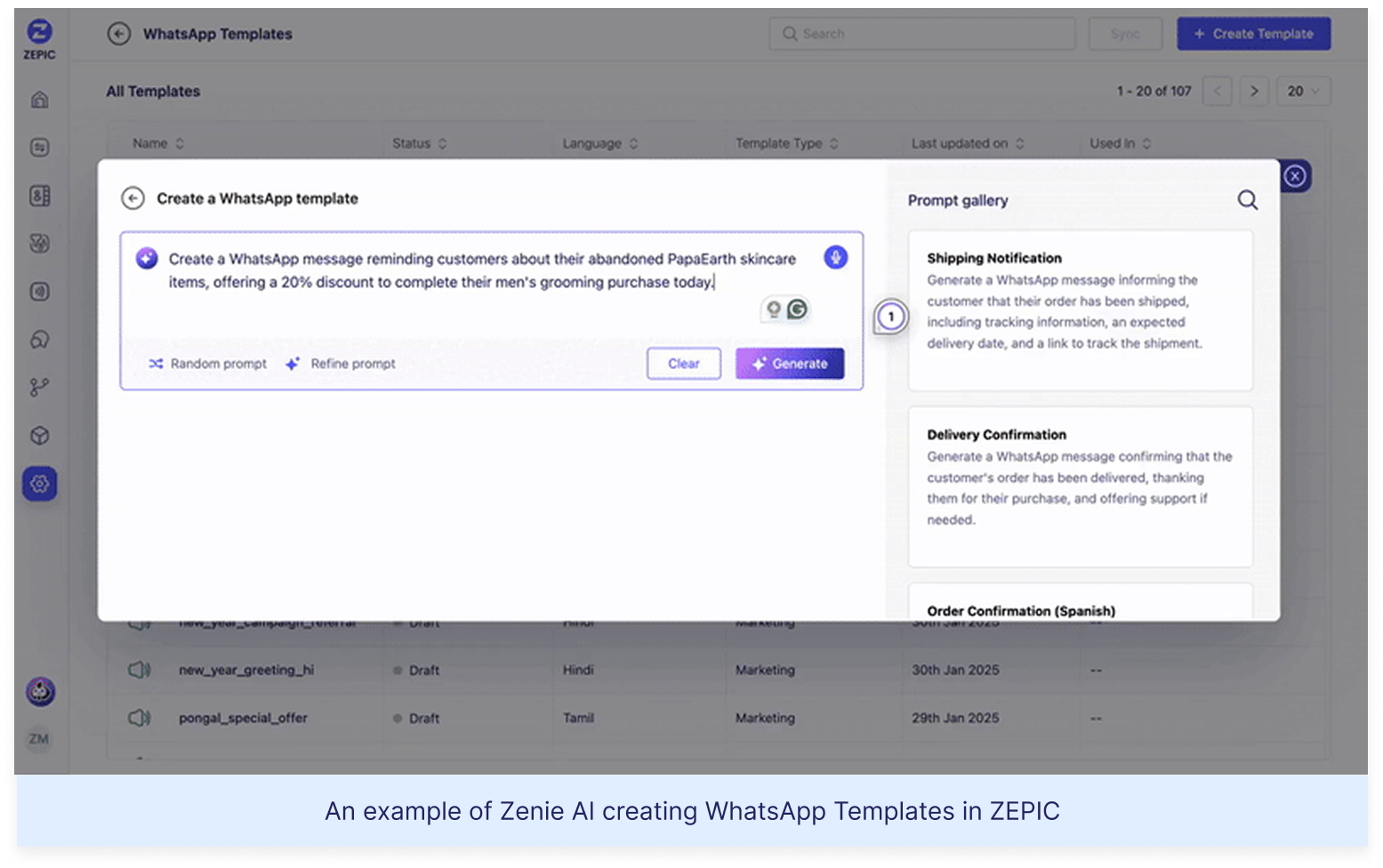
Enter ZEPIC: This is where we come in. With ZEPIC's automated Flows, you can:
Launch WhatsApp recovery messages (with 95% open rates!)
Set up perfectly timed email sequences (or vice versa)
Create personalized recovery offers not just on cart value but based on your customer’s behavior/preferences
Track and optimize everything from one dashboard
Fix #2: Reactivate past customers today
The Painful Truth: You're probably losing about 70% of your potential sales to cart abandonment. That's not just a statistic—it's real money walking out of your digital door. And looking for yet another Shopify app for abandoned cart recovery isn't going to fix it if you're not getting the fundamentals right.
The Quick Fix: Everyone knows you need multi-channel recovery that hits the sweet spot between "Hey, did you forget something?" and "PLEASE COME BACK!" But here's the reality—most recovery apps are a one-trick pony. They either do email OR WhatsApp, not both. And don't even get us started on personalizing offers based on cart value—that usually means toggling between three different dashboards while praying your apps talk to each other.
Enter ZEPIC: This is where we come in. With ZEPIC's automated Flows, you can:
Launch WhatsApp recovery messages (with 95% open rates!)
Set up perfectly timed email sequences (or vice versa)
Create personalized recovery offers not just on cart value but based on your customer’s behavior/preferences
Track and optimize everything from one dashboard
Offering light at the end of the tunnel is Google’s Privacy Sandbox which seeks to ‘create a thriving web ecosystem that is respectful of users and private by default’. Like the name suggests, your Chrome browser will take the role of a ‘privacy sandbox’ that holds all your data (visits, interests, actions etc) disclosing these to other websites and platforms only with your explicit permission. If not yet, we recommend testing your websites, audience relevance and advertising attribution with Chrome’s trial of the Privacy Sandbox.
Top 3 impacts of the third-party cookie phase-out
Who’s impacted
How
What next
Digital advertising and
acquisition teams
Lack of cookie data results in drastic fall in website traffic and conversion rate
Review all cookie-based audience acquisition. Sign up for Chrome’s trial of the Privacy Sandbox
Digital Customer Experience
Customers are not served relevant, personalised experiences: on the web, over social channels and communication media
Multiply efforts to collect first-party customer data. Implement a Customer Data Platform
Security, Privacy and Compliance teams
Increased scrutiny from regulators and questions from customers about data storage and usage
Review current cookie and communication consent management, ensure to align with latest privacy regulations




%201.png)