Meet

Neura HQ,
Your connected AI Agent Workforce Know more



TLDR:
In 2025, the home decor market was valued at USD 243.9 billion. Demand for home decor is estimated to grow to USD 258.1 billion in 2026. The category is growing, but so is the competition. New brands launch every week, content volume on every platform keeps climbing, and shoppers have more options and less patience than ever before.
Most home and lifestyle brands are already running Instagram, sending emails, and dabbling in WhatsApp. The problem is that they are treating each channel as a separate entity without a connected strategy behind any of it.
If you want to build real product awareness and turn that awareness into revenue, you must do something different. You have to start using each channel for what it does best, and connect them into a single experience. This guide breaks down how to do that across all three.
Before diving into tactics, it helps to understand why Instagram, WhatsApp, and email form such a strong trio for home and lifestyle specifically.
Instagram is a discovery engine. Over a quarter of social users across generations turn to Instagram to find their next purchase. For a category that is inherently visual, rooms, textures, lighting, and lifestyle aesthetics, it is the most natural platform for product awareness.
WhatsApp is a conversion and retention engine. WhatsApp Business messages achieve open rates of 95 to 98%, compared to 20 to 25% for email, with click-through rates ranging from 15 to 60% depending on campaign type, versus 2 to 6% for email. No other channel gets your message in front of more opted-in customers more reliably.
Email is a loyalty and lifecycle engine. Email automations accounted for just 2% of sends but drove 30% of revenue in 2025, earning 16 times more per send than scheduled campaigns. For home brands where the purchase cycle is long, and repeat buyers are disproportionately valuable, email is where you build the relationship over time.
Together, they cover discovery, conversion, and retention. Used in silos, each one underperforms. Used together, they compound.
Carousels for product storytelling. Carousel ads generate 20% more engagement than single-image ads. Use them to show a product in multiple room settings, walk through a styling decision, or tell the before-and-after story of a room transformation. Give people a reason to swipe.
Reels for discovery and reach. Reels account for 46% of time spent on Instagram and are shared more than 4.5 billion times per day. Short-form video showing how a product looks in a real home, how to style it with different aesthetics, or behind-the-scenes of how it is made, outperforms static product posts for reach.
Stories for community and urgency. Stories are the most used format on Instagram, with 71.9% of brand content on Instagram posted as Stories. Use them for flash sales, new arrivals, polls on colorways or finishes, and quick styling tips that keep followers in the habit of checking your account.
User-generated content as social proof. Home and lifestyle shoppers want to see products in real homes, not staged showrooms. Resharing customer photos, running campaigns with a branded hashtag, and featuring real-space setups consistently outperform polished catalog imagery in engagement.
Instagram DM Automation: Turn Engagement Into Revenue on Autopilot
Comment-to-DM: A home brand posts a Reel showing a new cushion collection styled in three different living room aesthetics, with the caption "Comment STYLE and we'll DM you the full lookbook." Every commenter instantly receives a DM with the lookbook link, a product guide, or a discount code.
Story Reply Automation: When a follower replies to your Story with a question or keyword, an automated DM fires immediately with the relevant information. For home brands running Stories on new arrivals, room styling polls, or behind-the-scenes content, this captures interest at the exact moment it peaks. A Story showing a new sofa colorway with the caption "Reply with your favorite color" can trigger a DM showcasing the full range with a direct shop link in seconds, at 2 am, without anyone on your team being online.
The fastest way for a home and lifestyle brand to get ROI from DM automation is to start with one high-visibility content piece and one clear conversion goal.
Here is a simple launch playbook:
Anthropologie's #DearAnthro Campaign:
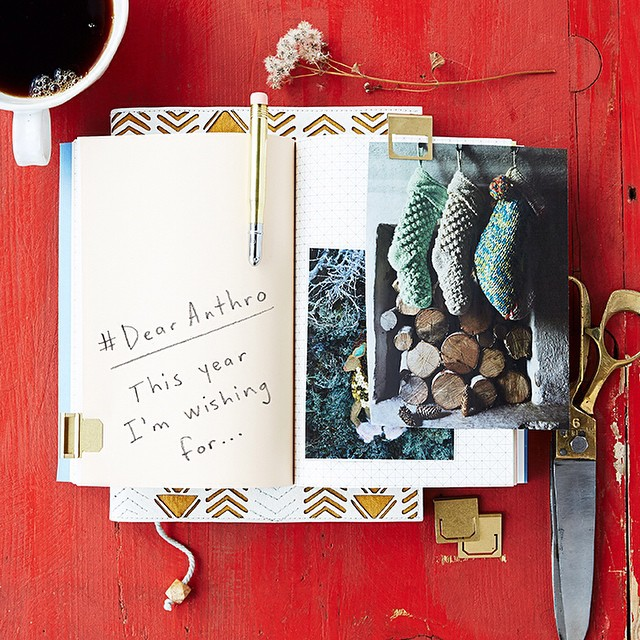
Over 12 days in December, Anthropologie invited followers to share their holiday wish lists using #DearAnthro and #Anthropologie. The response generated over 3,400 unique entrants and millions of potential impressions through their followers' networks. The mechanics were simple: ask for participation, reward it, amplify it. The community did the awareness work.
BEHR Paint's Instagram Live Color Campaign: BEHR ran a series of Instagram Live sessions, bringing in color experts and influencers to guide followers through choosing paint hues. The sessions spread across platforms and turned into a virtual paint party with polls, Q&As, and product demos. By making Instagram the venue for education and entertainment simultaneously, BEHR turned a low-consideration product into a high-engagement community moment.
West Elm's Creator Collective: West Elm launched The Collective in 2021, a structured ambassador program featuring two tiers of creators: tastemakers who receive monthly features on the West Elm website and insiders, consisting of emerging creators who share their favorite pieces with their audiences. Every post from a Collective member also feeds West Elm's own social channels. It is an awareness engine that runs on creator relationships rather than paid reach alone.
Wayfair's #WayfairAtHome Challenge. Wayfair partnered with micro-influencers to launch a TikTok and Instagram challenge centered on home transformations. Rather than polished lifestyle imagery, the campaign leaned into authentic room makeovers, which felt personal enough to be shareable and relatable enough to inspire purchase intent. The TikTok algorithm amplified user-generated content across millions of feeds.
Instagram builds awareness. But awareness without a next step is lost. The clearest conversion path for home and lifestyle brands is to use Instagram to drive WhatsApp opt-ins through a DM flow, a "chat with us" CTA in bio, or a Stories link that opens a WhatsApp conversation. This is where the awareness loop becomes a revenue loop.
Most home and lifestyle brands treat WhatsApp as a customer support tool: order confirmations, delivery updates, and complaint handling. That is a missed opportunity. WhatsApp-driven engagement results in a 27% sales increase for many businesses, and WhatsApp Business API usage has driven sales growth of up to 127% for select brands.
E-commerce promotional messages on WhatsApp see click-through rates of 40 to 60%, up to 10 times higher than email. For home brands running seasonal campaigns around key celebrations or events like Christmas, moving season, or home renovation cycles, those numbers represent a significant revenue opportunity that most brands are not using.
New arrival announcements: A short message with a product image, a brief description, and a direct link to the product page. Keep it personal: "We just launched something we think you'll love for your living room" outperforms "Shop our new collection."
Restock alerts: If a product sells out and returns, WhatsApp is the fastest way to recapture demand from customers who showed intent. Open rates close to 98% mean your restock message will actually be seen, unlike a restock email that competes with dozens of others in the same inbox.
Abandoned cart recovery: With WhatsApp marketing and automated recovery notifications, brands can recover up to 70% of abandoned carts, re-engaging customers who showed clear purchase intent but didn't complete checkout. A well-timed WhatsApp message 30 to 60 minutes after abandonment, before the shopper's intent has fully faded, is one of the highest-ROI automations a home brand can run.
Seasonal and occasion-triggered campaigns: Home decor purchases cluster around specific life events: moving, redecorating, gifting seasons, and new year resets. WhatsApp business catalogs attract over 40 million users browsing products each month. Segment your list by past purchase behavior and send targeted campaigns ahead of your key selling windows.
Post-purchase care sequences:A message three days after delivery asking how the product looks in the customer's home, with a link to a styling guide or care instructions, builds the kind of relationship that turns a one-time buyer into a repeat customer. It also generates the UGC you need for Instagram.
WhatsApp marketing only works if you earn the opt-in and respect it. Sending without consent, or sending too frequently results in blocks and complaints that damage your sender reputation. The brands seeing the strongest results use WhatsApp for timely, high-value messages, not daily broadcasts. Quality over volume is the governing principle.
For interactive outbound campaigns, WhatsApp delivers down-funnel conversion improvements of 3 to 10 times compared to email, largely depending on the level of personalization and friction in the conversion funnel. That upside is real, but it assumes messages are relevant and well-timed.
Email is the channel where the long game plays out. Automated emails generated $2.87 per email compared to $0.18 for standard campaigns in 2025, while click-to-conversion rates jumped 53% year-over-year, rising from 5.9% to 9%. For home and lifestyle brands where a customer who buys twice is worth three times a one-time buyer, the lifecycle automation stack is where email earns its keep.
Welcome sequence: The first email after sign-up is the highest-open email you will ever send. Use it to establish your brand's point of view, showcase your best-selling pieces in context, and set the expectation for what subscribers will receive. A three-email welcome sequence that introduces your aesthetic, your sourcing story, and your bestsellers consistently outperforms a single welcome discount.
Browse abandonment: A customer who spent time on your sofa collection page but did not add to cart is telling you something. A browse abandonment email 24 hours later, showing them exactly what they viewed plus complementary pieces, recaptures that intent before it goes cold.
Post-purchase styling sequence: After a purchase, send a follow-up email with styling ideas for the product they bought, care instructions, and suggestions for complementary pieces. For home brands, the "what goes with this" question is always on the buyer's mind. Answer it proactively, and you create the natural upsell.
Seasonal room refresh campaigns: Home decor has natural seasonal demand cycles. Email campaigns built around "spring refresh," "cozy autumn reset," or "holiday styling" consistently outperform generic promotional emails because they connect to the shopper's current mindset rather than the brand's sales calendar.
Win-back sequences: A customer who bought 12 months ago and has not returned is not lost. A well-crafted win-back email, starting with "We've added some new pieces since you last visited" and showing new arrivals that match their previous purchase, reactivates the relationship without feeling like a cold pitch.
In Q2 2025, 83.84% of home decor brand emails used emojis in subject lines, while urgency-based CTAs appeared in 19.03% of sends.
The broader principle is that home decor email works best when it leads with inspiration and visual appeal rather than promotional messaging.
A subject line like "Your living room, but better this autumn" will consistently outperform "20% off sitewide this weekend."
New product launch:
Seasonal campaign (e.g. Christmas, New Year refresh):
Customer retention:
If you are starting from scratch on a connected strategy, pick one high-impact moment and build it properly before expanding.
The highest-ROI starting point for most home and lifestyle brands is the post-purchase sequence. It reaches customers at the moment of highest engagement with your brand, drives complementary purchases, generates UGC for Instagram, and builds the repeat purchase behavior that compounds over time.
Build that sequence across all three channels, WhatsApp at day three, email at day fourteen, Instagram retargeting in between, and measure repeat purchase rate at 90 days. Once you see that working, expand to new product launches and seasonal campaigns using the same connected logic.
The channel advantage is real. Instagram reaches new audiences, WhatsApp converts with unmatched immediacy, and email builds loyalty over time. The compounding effect comes from connecting all three into one coherent customer journey rather than running three parallel broadcasts.
ZEPIC helps home and lifestyle brands build connected marketing experiences across email, WhatsApp, and Instagram that drive product awareness, conversion, and long-term customer value. Talk to our team about building your channel strategy.

%201.png)



.jpg)
.jpg)


